Recommended CDs

Wednesday, 17 September 2008

Tears and Laughter in Romeo and Juliet


I have been re-reading, with much pleasure, Shakespeare's earliest plays. Two Gentlemen of Verona might not be a play-goer's or a reader's favourite, but its themes and even plot elements run through all the later comedies up to Twelfth Night, and the early play can in fact be seen as a comic version of "The Tragical History of Romeus and Juliet", Arthur Brooke's narrative poem based on the Italian legend (Brooke's poem is used as a source in both Two Gentlemen and Romeo and Juliet).

At the same time, Shakespeare was probably writing his sonnets, with their rumination on Time and Love. Romeo and Juliet makes use of the sonnet form, firstly in the famous prologue:

Two households, both alike in dignity,
In fair Verona, where we lay our scene,
From ancient grudge break to new mutiny,
Where civil blood makes civil hands unclean.
From forth the fatal loins of these two foes
A pair of star-cross'd lovers take their life;
Whole misadventured piteous overthrows
Do with their death bury their parents' strife.
The fearful passage of their death-mark'd love,
And the continuance of their parents' rage,
Which, but their children's end, nought could remove,
Is now the two hours' traffic of our stage;
The which if you with patient ears attend,
What here shall miss, our toil shall strive to mend.


but also -- and much more daringly -- within the action itself, in the most "public" part of the action: Capulet's feast, which Romeo (rather reluctantly) and his friends have gate-crashed in disguise (masquers were often welcomed as uninvited guests on such occasions). The headstrong Tybalt has recognized Romeo and is champing at the bit to challenge him to a duel there and then; he is restrained by his angry father, for whom even the presence of a hated Montague isn't worth spoiling his party for. Meanwhile, the guests and the disguised Montagues are enjoying a public dance, from which the love-lorn Romeo (still in love with Rosaline Capulet at this point; a character we never see in the play!) feels excluded by his melancholy ("I have a soul of lead/So stakes me to the ground I cannot move") and he takes little interest in proceedings until he catches sight of Juliet ( ("O, she doth teach the torches to burn bright!"), and goes over at the change-over between dances to introduce himself, still in disguise, obviously. At this point, in this most public of scenes, the two lovers enter into their own private world; and Shakespeare uses a sonnet to symbolise this removal of the lovers to an internal sphere into which the world, even at its noisiest, may not intrude:

ROMEO

[To JULIET] If I profane with my unworthiest hand
This holy shrine, the gentle fine is this:
My lips, two blushing pilgrims, ready stand
To smooth that rough touch with a tender kiss.


JULIET

Good pilgrim, you do wrong your hand too much,
Which mannerly devotion shows in this;
For saints have hands that pilgrims' hands do touch,
And palm to palm is holy palmers' kiss.


ROMEO

Have not saints lips, and holy palmers too?


JULIET

Ay, pilgrim, lips that they must use in prayer.


ROMEO

O, then, dear saint, let lips do what hands do;
They pray, grant thou, lest faith turn to despair.


JULIET

Saints do not move, though grant for prayers' sake.


ROMEO

Then move not, while my prayer's effect I take.


They begin another sonnet at once, but this one is interrupted by the nurse; all too brief are the private moments allowed to the lovers in this play.

At the same time, some parts of the play are not so successful. I find Juliet's sudden use of extended legal metaphor (a favourite trope with our poet) when she tells Friar Laurence of her woes in Act 4 scene 1 to be highly unsuitable both for the character and for the situation. Also, when the Capulets learn of Juliet's supposed death (she's taken the friar's potion which makes her appear lifeless for 42 hours, remember), their lamentation borders dangerously on the comic.

LADY CAPULET
What noise is here?
Nurse
O lamentable day!
LADY CAPULET
What is the matter?
Nurse
Look, look! O heavy day!
LADY CAPULET
O me, O me! My child, my only life,
Revive, look up, or I will die with thee!
Help, help! Call help.

Enter CAPULET

CAPULET
For shame, bring Juliet forth; her lord is come.
Nurse
She's dead, deceased, she's dead; alack the day!
LADY CAPULET
Alack the day, she's dead, she's dead, she's dead!
CAPULET
Ha! let me see her: out, alas! she's cold:
Her blood is settled, and her joints are stiff;
Life and these lips have long been separated:
Death lies on her like an untimely frost
Upon the sweetest flower of all the field.
Nurse

O lamentable day!
LADY CAPULET
O woful time!
CAPULET
Death, that hath ta'en her hence to make me wail,
Ties up my tongue, and will not let me speak.

Enter FRIAR LAURENCE and PARIS, with Musicians

FRIAR LAURENCE
Come, is the bride ready to go to church?
CAPULET
Ready to go, but never to return.
O son! the night before thy wedding-day
Hath Death lain with thy wife. There she lies,
Flower as she was, deflowered by him.
Death is my son-in-law, Death is my heir;
My daughter he hath wedded: I will die,
And leave him all; life, living, all is Death's.
PARIS Have I thought long to see this morning's face,
And doth it give me such a sight as this?

LADY CAPULET
Accursed, unhappy, wretched, hateful day!
Most miserable hour that e'er time saw
In lasting labour of his pilgrimage!
But one, poor one, one poor and loving child,
But one thing to rejoice and solace in,
And cruel death hath catch'd it from my sight!
Nurse
O woe! O woful, woful, woful day!
Most lamentable day, most woful day,
That ever, ever, I did yet behold!
O day! O day! O day! O hateful day!
Never was seen so black a day as this:
O woful day, O woful day!
PARIS
Beguiled, divorced, wronged, spited, slain!
Most detestable death, by thee beguil'd,
By cruel cruel thee quite overthrown!
O love! O life! not life, but love in death!
CAPULET

Despised, distressed, hated, martyr'd, kill'd!
Uncomfortable time, why camest thou now
To murder, murder our solemnity?
O child! O child! my soul, and not my child!
Dead art thou! Alack! my child is dead;
And with my child my joys are buried.

How did Shakespeare expect his audience to take this highly artificial scene of extravagant lamenting? First, the audience remembers that the Capulet family has repeatedly rebuked Juliet for (as they supposed) over-doing her mourning of her kinsman Tybalt (slain by Romeo in revenge for the death of Mercutio). In Act 3, scene v, though Tybalt, by the play's chronology, cannot have been dead for more than a few hours, Lady Capulet, advancing the case for Juliet to marry Paris, rebukes her daughter thus:

Evermore weeping for your cousin's death?
What, wilt thou wash him from his grave with tears?
An if thou couldst, thou couldst not make him live;
Therefore, have done: some grief shows much of love;
But much of grief shows still some want of wit.
Not just "want of wit" (i.e. derangement); excessive grief was held to border on heresy, by seeming to impugn the justice of providence, as Claudius reminded Hamlet:

Tis sweet and commendable in your nature, Hamlet,
To give these mourning duties to your father:
But, you must know, your father lost a father;
That father lost, lost his, and the survivor bound
In filial obligation for some term
To do obsequious sorrow: but to persever
In obstinate condolement is a course
Of impious stubbornness; 'tis unmanly grief;
It shows a will most incorrect to heaven,
A heart unfortified, a mind impatient,
An understanding simple and unschool'd:
For what we know must be and is as common
As any the most vulgar thing to sense,
Why should we in our peevish opposition
Take it to heart? Fie! 'tis a fault to heaven,
A fault against the dead, a fault to nature,
To reason most absurd: whose common theme
Is death of fathers, and who still hath cried,
From the first corse till he that died to-day,
'This must be so.'
Although Claudius is of course disingenuous (since he is the undiscovered murderer of Hamlet's father), his advice is sound from the religious point of view; as is Lady Capulet's more curt advice, albeit showing a want of feeling for her daughter's grief (although she does not know that her grief is for Romeo, her cousin's murderer, rather than for Tybalt himself).

The Capulets extravagant woe over their apparently lifeless daughter lends a retrospective irony to Lady Capulet's earlier advice. This has the effect of distancing the audience from the Capulets' grief; although, since we know that Juliet is not really dead, but only sleeping, we cannot enter into their feelings anyway. Furthermore, well-meant advice that is useless because the giver of it cannot truly enter into the feelings of the person for whom it is intended is a common Shakespearian theme found already in his earliest comedies, Two Gentlemen of Verona and The Comedy of Errors. However, Shakespeare goes still further than this: the Capulets' over-use of rethorical tropes* (*for the record, as listed by the Oxford Shakespeare they are a) apostrophe: "O lamentable day!"; b) exergasia, repeating the same thought in many figures; c) repetition; d) prosopopeia, the personification of death; e) asyndeton, the omission of conjuctions; f) recurring epizeuxis, the repetition of the same word in close succession) makes one suspect that Shakespeare is sending up the whole tradition of Senecan Tragedy. Indeed, a line of Paris's ("O love! O life! not life, but love in death!") directly recalls a much parodied passage ofThomas Kyd's The Spanish Tragedy:

O eyes, no eyes, but fountains fraught with tears;
O life, no life, but lively form of death;
O world, no world, but mass of public wrongs...

Evidently, a parody of the older play's bombast could be counted on for a laugh even at the end of the century; Kyd's flowery rhetoric is memorably sent up in the Pyrrhus speech in Hamlet. At this point in Romeo and Juliet, however, with the action moving swiftly towards its tragic denouement, this highly stylized scene of artificial lament has struck many directors, audiences, and readers as inappropriate. For once Friar Laurence's sententious rhetoric, reminding Lady Capulet of her own earlier sentiments, in putting an end to this scene of extravagant lamenting is entirely welcome:

Peace, ho, for shame! confusion's cure lives not
In these confusions. Heaven and yourself
Had part in this fair maid; now heaven hath all,
And all the better is it for the maid:
Your part in her you could not keep from death,
But heaven keeps his part in eternal life.
The most you sought was her promotion;
For 'twas your heaven she should be advanced:
And weep ye now, seeing she is advanced
Above the clouds, as high as heaven itself?
O, in this love, you love your child so ill,
That you run mad, seeing that she is well:
She's not well married that lives married long;
But she's best married that dies married young.
Dry up your tears, and stick your rosemary
On this fair corse; and, as the custom is,
In all her best array bear her to church:
For though fond nature bids us an lament,
Yet nature's tears are reason's merriment.
There is a strong suggestion that Shakespeare may have been trying to add "local colour" by sending up the extravagance of Italian lamentation. Under this interpretation, Friar Laurence becomes an honorary Englishman, reasserting the importance of restraining one's emotions and maintaining a "stiff upper-lip"! After this rebuke, Capulet's sad and dignified speech is more genuinely moving than his family's previous weeping and wailing:

All things that we ordained festival,
Turn from their office to black funeral;
Our instruments to melancholy bells,
Our wedding cheer to a sad burial feast,
Our solemn hymns to sullen dirges change,
Our bridal flowers serve for a buried corse,
And all things change them to the contrary.


This almost rescues the scene from parody. Directors have frequently gone further by cutting the preceding lamentations; indeed the "bad" quarto of Romeo and Juliet omits several lines, suggesting that even in Shakespeare's day the scene may have been cut. One wonders whether the play's earliest directors, or Shakespeare himself, realized that a scene that was written with the intention of provoking some mirth was destabilizing the tragic resonance of the play as a whole by provoking out-right hilarity among the "groundlings", and consequently reduced the scene significantly in later performances (the "bad" quarto also cuts many of Juliet's legal tropes in the scene discussed earlier). The audience's reception of the scene as originally written may have inspired Shakespeare to write a parody of his entire tragedy and play it purely for laughs as the play acted by the "mechanicals" in A Midsummer Night's Dream (which most scholars believe was written shortly after Romeo and Juliet). Theseus and Philostrate may give us an indication, allowing for exaggeration, as to how the lamentation scene in Romeo and Juliet was received by its first audiences:

THESEUS
Reads 'A tedious brief scene of young Pyramus
And his love Thisbe; very tragical mirth.'
Merry and tragical! tedious and brief!
That is, hot ice and wondrous strange snow.
How shall we find the concord of this discord?
PHILOSTRATE

A play there is, my lord, some ten words long,
Which is as brief as I have known a play;
But by ten words, my lord, it is too long,
Which makes it tedious; for in all the play
There is not one word apt, one player fitted:
And tragical, my noble lord, it is;
For Pyramus therein doth kill himself.
Which, when I saw rehearsed, I must confess,
Made mine eyes water; but more merry tears
The passion of loud laughter never shed.

Not that laughter and death need be kept wholly separate. Earlier in Romeo and Juliet, Mercutio (one of Shakespeare's superly drawn minor characters) dies as he has lived: with a merry quip and a pun.

ROMEO
Courage, man; the hurt cannot be much.
MERCUTIO

No, 'tis not so deep as a well, nor so wide as a
church-door; but 'tis enough,'twill serve: ask for
me to-morrow, and you shall find me a grave man.

Some find the pun as excruciating as Tybalt's mortal thrust itself; but it is entirely in character for the jesting Mercutio, who cannot even be "grave" about his own death. Death has the last laugh, however; only he can make Mercutio "grave", by providing him with one. Symbolically, Mercutio's death marks a change in the mood of the play, which up till then had been mostly a comedy; thereafter the tone of the play becomes, on the whole, more grave.

But not entirely, for Shakespeare was aware of how laughter and tears, life and death, are closer to each other in the real world than in the discreet genres insisted on by the neo-classical playwrights, for whom comedy and tragedy must be rigorously separated. Auden captured something of Shakespeare's understanding of life when he wrote, in Museé des Beaux Arts:

About suffering they were never wrong,
The Old Masters; how well, they understood
Its human position; how it takes place
While someone else is eating or opening a window or just walking dully along;
How, when the aged are reverently, passionately waiting
For the miraculous birth, there always must be
Children who did not specially want it to happen, skating
On a pond at the edge of the wood...


Shakespeare shares the Old Masters' sense of live as a tragicomedy: while Hamlet is immersed in his melancholy, the grave-diggers pun and quip amidst the remains of human existence; while the Capulets are preparing for a feast upstairs, the servants are noisily moving joint-stools and clattering pots and pans below.

The Shakespearean pun has often come in for criticism; but the pun shows in verbal form how easily tragedy and comedy may slide into one another, how closely allied are laughter and tears; as such it is eminently suited to convey Shakespeare's concept of life as tragicomedy. However, this balance between tears and laughter must be handled very acutely by the playwright, and there are signs that Shakespare temporarily lost control of this balance in Act 4, scene iv of Romeo and Juliet.


Sunday, 31 August 2008

The wind began to howl... Good luck this time, NOLA


Crash on the levee, water's gonna overflow

One thing I neglected to mention in my previous blog entry about Modern Times is that its worldwide official release day was also the first anniversary of Hurricane Katrina making landfall in Lousiana. Meanwhile, President Bush strummed a guitar [right] in California while New Orleans drowned, a lasting symbol of his presidency.

Perhaps the release date of Modern Times was a coincidence; but on the other hand, it does feature a song entitled The Levee's Gonna Break. This is the album's most transparent "borrowing", the song clearly deriving from When the Levee Breaks by Kansas Joe McCoy and Memphis Minnie, which was about the Mississippi Flood of 1927, a calamity that inspired several blues songs. (Incidentally, Memphis Minnie's shout-out to Ma Rainey is the model for Dylan's name-dropping of Alicia Keys in Thunder on the Mountain; but Bob was sampling Memphis Minnie as far back as Stuck Inside of Mobile With the Memphis Blues Again, as the outtake of that song released on Bootleg Series 7: No Direction Home shows.) A youtube user has made a very appropriate video to the Kansas Joe/Memphis Minnie version.


The most famous version of the song is the one by Led Zeppelin on their 1971 album Led Zeppelin IV. Dylan's new version is a curate's egg; it quotes some lines directly from the original, and adds some of his own that might refer to either the 1927 or the 2005 disaster:

Everybody saying this is a day only the Lord could make

Some people on the road carrying everything that they own

But other lines are unrelated and could be sampled from a dozen blues songs or improvised randomly in a way reminiscent of 10,000 Men on Under the Red Sky. One line seems to allude sarcastically to the plight of the proletariat (in the manner of Joe Hill's "Pie in the Sky When You Die"), thus harking back to Workingman's Blues #2:

Few more years of hard work, then there'll be a 1,000 years of happiness

But the previous lines incongruously refer to Carl Perkin's rockabilly classic "Put Your Cat Clothes On", cat clothes of course being what hepcats (guys) and kittens (chicks) wear; the juxtaposition with the more formal-sounding "evening dress" is amusing.

Here's a fine live version of Dylan's version of the song, from Chatillon, Italy 18th June this year:
It's noticeable how much stronger the song has become in live performance this year.

(I found a youtube clip of this performance, but it's only one minute long.)

How typical that Dylan's new title for the song should use his own favourite tense, the immediate future ("gonna"), which he uses so much (particularly in the Basement Tapes era) that it might well be called the Bob Dylan tense.

An early song that uses this tense is A Hard Rain's Gonna Fall. On his visit to the city in 2003, Bob Dylan performed an inspired version of this anthemic song, almost as though he knew what was in store for the city (so it seems with hindsight, which can make a prophecy out of the slightest coincidence). Here is that performance.

They're trying to wash us away

A more recent song about the 1927 flood became suddenly topical in 2005 because of the inevitable parallels between President Coolidge's racist indifference to the plight of Lousiana flood victims and the criminal negligence of the Bush administration. The original version of Randy Newman's Louisiana 1927 is on his 1974 album Good Old Boys, perhaps Newman's masterpiece and an essential album in anybody's record collection. Here is Randy singing it at a benefit for the victims of Hurricane Katrina:


Incidentally, I am relieved, if not surprised, that Randy sticks to his original lyrics and uses the phrase "this poor crackers land." The contemptuous term "crackers" is similar to the more recent "poor white trash", and nails Coolidge's attitude to the flood victims exactly. Other versions of the song, such as Aaron Neville's, for reasons of misguided political correctness substitute a more neutral term ("farmers") that softens the original song's condemnation of Coolidge.

They say prayer has the power to help (Ain't Talkin')

As I write, people are being evacuated from New Orleans in preparation for the landfall of Hurricane Gustav, expected in the early hours of Monday morning. It is sincerely to be hoped that the city rides out this new storm and the levees hold firm this time. Of all the cities in America, New Orleans is the one I'd most like to visit, because of the richness of its musical heritage, the fame of its cuisine, and the celebrated conviviality of its people. Alas, I do not share Dylan's belief in the power of prayer, but my thoughts are with NOLA right now. If I were to frame a prayer, it might be like Lear's in the storm:

Poor naked wretches, wheresoe'er you are,
That bide the pelting of this pitiless storm,
How shall your houseless heads and unfed sides,
Your loop'd and window'd raggedness, defend you
From seasons such as these? O, I have ta'en
Too little care of this! Take physic, pomp;
Expose thyself to feel what wretches feel,
That thou mayst shake the superflux to them
And show the heavens more just.

Friday, 29 August 2008

'Modern Times' is two years old today


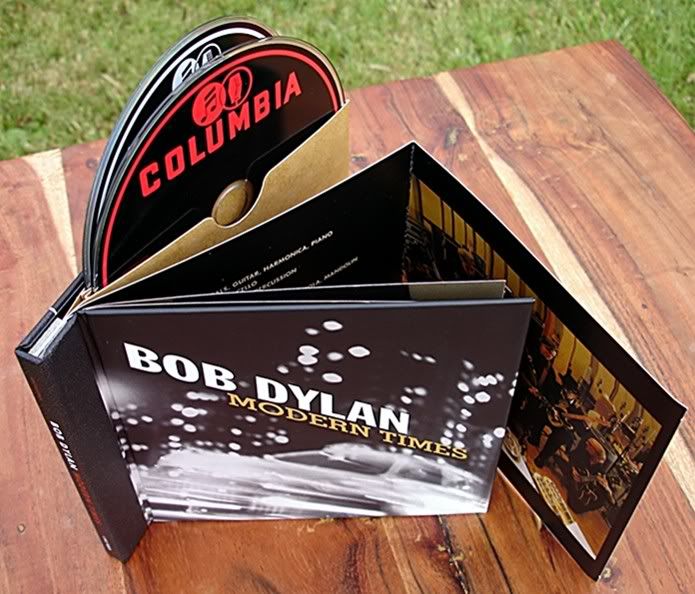
Bob Dylan's 32nd studio album was released 29th August, 2006. It was greeted with almost universal critical praise, but how does it hold up two years later? And how have the individual songs fared in live performance?

Modern Times was released at the high point of a tide of critical praise that had been rising ever since Bob's brush with death in 1997 reminded critics, many of whom had been bashing Dylan's work since as far back as the release of Renaldo & Clara, that Dylan would not be always there for them to take for granted, and that we ought to celebrate his achievements while we still have him. With the subsequent release of the Grammy-winning Time Out of Mind there began a period in which Dylan's critical stock rose so high that nowadays he is in receipt of praise that is almost as undiscriminating as the critical brickbats levelled at him in the eighties and early nineties. One of the few dissenting voices in the general chorus of praise for Modern Times, Alex Petridis in The Guardian, wrote waspishly: "It's hard to hear the music of Modern Times over the inevitable standing ovation and the thuds of middle-aged critics swooning in awe."

Two years later it is even more apparent that Petridis has a point. A solid achievement, Modern Times must be counted a relative disappointment compared to its illustrious predecessor "Love and Theft", Dylan's finest album since Blood on the Tracks and Desire in the mid-seventies. The quality that "Love and Theft" had in abundance was Dionysian energy: so welcome after the ennui and existential angst that had marked all Dylan's work since Infidels. Indeed, this ennervating ennui really begins with Don't Fall Apart on Me Tonight on the album just mentioned:

I wish I'd been a doctor
Maybe I'd have save some lives that have been lost
Maybe I'd have done some good in the world
'Stead of burning every bridge I've crossed.

Fine lines, undoubtedly, but a Dylan who looks back, and especially one who looks back with such despair and disappointment, is an unrecognizable shell of the energetic, questing, Dionysian figure of his best work. By contrast on Blood on the Tracks the singer plumbs the depths of despair, but drags from it the Lear-like rage of Idiot Wind and with Buckets of Rain, learns Lear's lesson of Stoic patience also.

This existential ennui came in Dylan's late middle age at the end of a period of great creative achievement from 1974 through 1983, and from there on becomes the dominant note of his work; think of songs like When the Night Comes Falling From the Sky and Dark Eyes on Empire Burlesque and What Good Am I? , What Is It You Wanted?, and Shooting Star on Oh Mercy, in which Bob basically repeats the same mantra over and over: he knows no answers, he has no hope, he lives companionless in a world apart where "life and death are memorized." All these negative feelings reach their peak of artistic expression on Time Out of Mind, which contains what may be the most negative, nihilist line in his entire output:

Well my sense of humanity has gone down the drain
Behind every beautiful thing there's been some kind of pain
She wrote me a letter and she wrote it so kind
She put down in writing what was in her mind
I just don't see why I should even care
It's not dark yet, but it's getting there

When I first heard the line I've marked in bold, I found it so upsetting and depressing that it took me a long time to appreciate the real artistic achievement of Time Out of Mind, which is to state in the starkest form yet the existential ennui that had been overpowering Dylan's work since the mid-eighties. In that sense, it performs the same function as did Watching the River Flow, which faced up to the loss of his muse in the midst of his domestic content with its disarming opening line: "What's the matter with me? I don't have much to say." A Dylan who doesn't care, who is indifferent to love and desire, and who relies on negativity to pull him through is not the Dylan who once declared "this music that I’ve always played is a healing kind of music" and who wrote

Desire... never fearful
Finally faithful
It will guide me well
across all bridges
inside all tunnels
never fallin’.


A spiritual sickness hangs over Time Out of Mind from its opening lines, and it is only reinforced by the album's grim focus on physical decay: scars that won't heal, flesh falling off the singer's face, every nerve so vacant and numb. When he sings "But my heart just won't give in", you get the sense that he only wishes it would. Highlands, which does have its moments of humour and relief, nevertheless leaves us with a portrait of the singer as an old man shuffling along the street, talking to himself, and envying the younger people from whose unselfconscious joys and laughter he is forever banished:

I see people in the park forgetting their troubles and woes
They're drinking and dancing, wearing bright colored clothes
All the young men with their young women looking so good
Well, I'd trade places with any of them
In a minute, if I could

So in the 14 years since Don't Fall Apart on Me Tonight, Dylan has gone precisely nowhere: still wishing he were living someone else's life, looking back with regret and despair.

The achievement of Time Out of Mind, as heretofore stated, is to state these negative feelings in unpredecentedly stark terms. But the album marks a dead end: he cannot go forward artistically by simply restating over and over these feelings of existential isolation, of negativity and regret.

That is why "Love and Theft" was such a spectacular achievement. It has an energy and vitality not heard in any Dylan song probably since Jokerman and the brilliant, underrated Tell Me in the Infidels sessions. Gone is the companionless, misanthropic singer of Dark Eyes, Not Dark Yet, and Highlands; the singer on this album shows himself still receptive to feelings of love, friendship, and gratitude:

Well my ship's been split to splinters and it's sinking fast
I'm drownin' in the poison, got no future, got no past
But my heart is not weary, it's light and it's free
I've got nothin' but affection for all those who've sailed with me

(Of course, these lines are from Mississippi, which was written for the Time Out of Mind album; and that album's atmosphere of bleak misanthropy and spiritual ennui would have been considerably relieved by that song's inclusion, as Dylan intended. Unfortunately, he and producer Daniel Lanois could not see eye to eye on the song's production, and so the song was dropped from the album. The original recording of Mississippi is to appear on the forthcoming Bootleg Series collection of outtakes, Tell Tale Signs.)

Best of all, perhaps, is the brilliant jump blues Summer Days, a song that could not have appeared on Time Out of Mind. In contrast to the despairing resignation of Not Dark Yet, which dolefully accepted that "it's not dark yet, but it's getting there", the singer of Summer Days reminds us of Dylan Thomas's "Do Not Go Gentle Into That Good Night":

Do not go gentle into that good night,
Old age should burn and rave at close of day;
Rage, rage against the dying of the light.

But rather than raging against the dying of the light, the singer of Summer Days dances against it, leaping on the table to propose a toast to the King, and declaring that though summer days and nights are gone, that doesn't mean that there is no more fun to be had. The Dionysian energy of this singer is more like the Dylan we know of old, one busy being born rather than busy dying.

The energy, high spirits, and perhaps most welcome of all, the humour of "Love and Theft" made it Dylan's finest album for over 20 years. It sparkles with wit, and contains more quotable lines than any album since Street-Legal. It was perhaps too much to hope that Modern Times could equal this standard. But refreshingly, there is no relapse into the doldrums of most of Dylan's post-Infidels output. Most welcome is the extension of Dylan's musical palate beyond his usual reliance on blues and ballad forms, although there are some disappointingly generic blues shuffles on this album also (a couple of which border on musical plagiarism). Not since the underrated Shot of Love has Dylan dipped so much into the rich waters of American popular music. A particular source is pre-rock pop of the twenties to the fifties. Bing Crosby is a particularly strong influence; "When the Deal Goes Down" is musically a chord-by-chord recreation of Bing's "Where the Blue of the Night Meets the Gold of the Day" and "Beyond the Horizon" lifts the tune of "Red Sails in the Sunset." Moreover, Bing's version of "Brother, Can you Spare A Dime?" (played by Bob on the Theme Time Radio Hour show "Rich Man, Poor Man") hangs over Workingman Blues #2. How much love and how much theft lies in all these borrowings has been furiously debated.

One of the most pleasing aspects of "Love and Theft" was its cheerful sexuality, as in the artful suggestion of waning potency in Summer Days:

My dogs are barking, there must be someone around
I got my hammer ringin', pretty baby, but the nails ain't goin' down


or this saucy invitation in High Water (for Charley Patton):

Got a cravin' love for blazing speed
Got a hopped up Mustang Ford
Jump into the wagon, love, throw your panties overboard

And best of all, this allusive third-person reference:

Last night 'cross the alley there was a pounding on the walls
It must have been Don Pasquale makin' a two a.m. booty call


Don Pasquale is the eponymous character in Donizetti's opera buffa, based on the commedia dell'arte archetype of the vain and foolish old man who tries to thwart the young heroine's love for the hero by marrying her himself. With a touch of comic genius Dylan has this stock character paying a "2 a.m. booty call"; and the pounding on the walls suggests that this Don Pasquale is no impotent figure of fun, but a virile figure capable of satisfying his younger lover.

By contrast, the sexuality on Modern Times comes over as idle boasting or even slightly creepy, as in the shout out to Alicia Keys in Thunder on the Mountain and in the unpleasantly sexist line "I want some real good woman to do just what I say" in the same song, in which the singer studies Ovid's Art of Love and proclaims "here's hot stuff here and it's everywhere I go." Unlike Don Pasquale who is getting on with it, paying his booty call, the singer of Thunder on the Mountain is just beating on his trumpet, or rather blowing his trombone (a rather obvious sexual metaphor).

Compare also the confident strut of Cry A While on "Love and Theft":

Well, there's preachers in the pulpits and babies in the cribs
I'm longin' for that sweet fat that sticks to your ribs
I'm gonna buy me a barrel of whiskey - I'll die before I turn senile

and the same song's earlier line about feeling like a fighting rooster with the much less convincing boast in Spirit on the Water:

You think I'm over the hill
You think I'm past my prime
Let me see what you got
We can have a whoppin' good time

That corny and dated phrase "whoppin' good time" is the antithesis of Don Pasquale's ultra-hip "booty call" and rather deflates the intended boast. Rather than as the still virile aging stud that the singer intends to present himself as, he comes over more like a paunchy dad trying to dance at his daughter's wedding reception.

Dylan does improve this verse considerably in concert by singing the first two lines as questions, with an implied "Oh yeah?!", invariably getting a reaction from the audience. And this viagra-induced boasting is at least an improvement on the indifference to desire manifest on Time Out of Mind.

Another weakness of Modern Times compared to its predecessor is its rather precious and somewhat stilted lyricism that at times borders on Victorian pastiche, especially in the parlour ballad When the Deal Goes Down and Spirit on the Water. This may be due to Dylan's falling under the spell of the Civil War poet Henry Timrod (reflected in several borrowings from the earlier poet's work). Compare the freshness of these lines from Moonlight:

The clouds are turnin' crimson
The leaves fall from the limbs an'
The branches cast their shadows over stone
Won't you meet me out in the moonlight alone?

The boulevards of cypress trees
The masquerades of birds and bees
The petals, pink and white, the wind has blown
Won't you meet me out in the moonlight alone?

The trailing moss and mystic glow
Purple blossoms soft as snow
My tears keep flowing to the sea
Doctor, lawyer, Indian chief
It takes a thief to catch a thief
For whom does the bell toll for, love? It tolls for you and me

where the self-conscious poeticism is relieved by Dylan's familiar tricksy rhyming ("crimson", "limbs an'") and the admixture of nursery rhyme and familiar quotation; with

I picked up a rose and it poked through my clothes
I followed the winding stream
I heard the deafening noise, I felt transient joys
I know they're not what they seem
In this earthly domain, full of disappointment and pain
You'll never see me frown
I owe my heart to you, and that's sayin' it true
And I'll be with you when the deal goes down

which undoubtedly have a certain charm, but border on pastiche.

Against this, Modern Times has strengths of his own. It is much better sung than its predecessor (though the musicianship is not of a similarly high standard), and its three best songs are outstanding. The first, Workingman Blues #2, is the closest the album gets to evoking the spirit of Charlie Chaplin's Modern Times. The
song features some of the strongest, most evocative writing of the album, for instance, in this reminder that all of us, rich or poor, walk in the valley of the shadow of death:


The opening lines seem to have an extra topical relevance as the world's economy goes into recession:

There's an evenin' haze settlin' over the town
Starlight by the edge of the creek
The buyin' power of the proletariat's gone down
Money's gettin' shallow and weak
The place I love best is a sweet memory
It's a new path that we trod
They say low wages are a reality
If we want to compete abroad

However, this is no rewrite of North Country Blues or Hollis Brown. Its narrative element is non-linear and its protagonist's situation more complex; whoever the singer is supposed to be, he is hardly the typical working man. Dylan is unlikely to usurp Springsteen's status as the poet laureate of the blue collar worker. It's a complex song full of strong images, memorable lines, and with a rousing chorus.

Even more impressive is Nettie Moore, one of Dylan's great ballads, and a song that he has invariably interprets powerfully in concert. A notable feature of the song, despite its folk ballad form, is its saturation in the language of the blues. The opening line quotes the old song "Lost John":

Lost John standin' by the railroad track
Waitin' for the freight train to come back

while later lines evoke the famous story of Frankie and Albert. The crossroads where Robert Johnson is said to have sold his soul to the devil is also evoked. As with many of Dylan's recent songs, it is difficult to say what this collage of recollected and original lines means, but the song is undoubtedly highly evocative.

And finally, the album's closer Ain't Talkin', a mysterious and somewhat sinister epic that returns us to some extent to the atmosphere of Time Out of Mind. The claim that Modern Times was the final album of a trilogy stemmed from his record label rather than the artist himself; in fact, Dylan has specifically denied it. Nevertheless, this dark tale of a man walking, walking, walking, until he reaches the edge of the world (which he appears to doubt is round as men say) brings us full circle to the earlier album, which opens with the words "I'm walking..." and thereafter uses the image of the singer walking "a thousand miles from home" (or rather a million miles) repeatedly as a symbol of his isolation from society. The song begins with a reminiscence of the story of Mary Magdalene mistaking the risen Christ for the gardener of the grounds; but this "mystic" garden is a place of violent menace where "wounded" flowers hang from the vine and the singer is struck from behind. The singer himself threatens to slaughter his enemies if he ever catches them sleeping. He is not alone (which separates him from the isolated figure of TOOM, who seems more of an autobiographical than the mysterious narrator of "Ain't Talkin'), but accompanied by a band of brothers who "share my code", a faith that's long been abandoned, as he walks through a world of hostile infidels and "cities of the plague". The song raises more questions than it answers, and when the narrator steps off the end of the world in the song's final lines, we still have no idea who he is supposed to represent. Several lines in the grim discursive narrative are borrowed from Ovid's self-pitying letters from his exile on the Black Sea, the Tristia, but the story seems closer to Homeric epic than classical elegy. Although it raises more questions than it answers, as a performance it is gripping, full of menace, horror, and intensity.

I leave you with videos of these three songs, each of them a classic of the modern Dylan.

Workingman Blues #2 was a song Bob found difficult to make effective in its first year of live performance. It wasn't until the Australian tour of 2007 that the song really came into its own. It is now a regular concert standout. The following video is identified only as "live 2008"; great sound, though poor video.


Here's a fine Nettie Moore from 2006:


And here's my favourite performance of Ain't Talkin' (Melbourne, Australia 19th August, 2007):


Sunday, 17 August 2008

Mystery early Dylan performance (contains mp3s)


Last October BBC radio broadcast "Dream Dylan Live", a show featuring 10 live performances from across the years cobbled together into a "virtual live show."

In truth, this would have been few people's "dream" concert in the sense of the ideal live Bob Dylan show. On the other hand, the show accurately conveyed the impression of "a series of dreams"— random and unconnected performances each making a strong, vivid impression, but offering no coherent raison d'être.

Only two tracks were unknown to collectors. I may have been the first, on a Dylan internet forum at least, to suggest that Blowin' in the Wind and Only A Pawn in Their Game from this programme could have been from Dylan's Carnegie Hall concert of 23th October, 1963.

This suggestion was pure conjecture, no more than educated guess on my part, based purely on the fact that the 1963 Town Hall and Carnegie Hall concerts are known to have been recorded by Columbia; a live album culled from the two shows was prepared for release in 1964, and then aborted, for reasons that remain unclear.

Both 'Blowin' in the Wind' and 'Only A Pawn in Their Game' were performed at the Carnegie Hall concert. In 2005, Sony-Columbia released two songs from the Carnegie show on Bootleg Series 7: No Direction Home, and a further six songs on a bonus disc available to purchasers of the Bootleg Series CDs and the Bob Dylan Scrapbook. So it seemed natural to deduce that the two songs donated to the BBC for 'Dream Dylan Live' were among those considered but rejected for release in 2005. (Why not just release the whole concert already? It's a far better performance than the 1964 Halloween Concert released as Bootleg Series Vol.6.)

To my consternation, my conjecture was immediately circulated as fact. Apparently the rest of the Dylan community were thinking on the same lines as I. Nevertheless, in the world of Dylan collccting, things have rarely been as they have seemed. A few months ago, the bootleg label Hollow Horn finally ended Columbia's 45-year striptease with regard to this show (unveiling a track or two every so many years) and released this historic show in its entirety, and in stunning quality. This followed the final release of the even more historically important Town Hall concert a few months earlier.

I've been much too busy to compare the performances of Blowin' and Pawn on the Hollow Horn release with the Dream Dylan Live performances until now. In fact, I just assumed that my initial guess was right.

Well guess what—I was only 50% on target! The DDL Blowin' in the Wind is indeed the Carnegie Hall one. There are at least two fairly conclusive fingerprints that establish this identification. In the first place, Bob sings "How many times can a man turn his back" rather than the more usual "turn his head." And he adds a word in another line: "How many times must a man look up/Before he can really see the sky..."

However, "Only A Pawn in Their Game" is NOT the same performance! This is pretty obvious, because in the Dream Dylan Live performance, after the lines "The deputy sheriffs, the soldiers, the governors get paid/And the marshals and cops get the same" Bob forgets the lyrics and sings a garbled version of the rest of the verse!

So we have a bit of a mystery. This is quite clearly a 1963/4 performance, but does not correspond to any known performance. It's not the Greenwood, Mississippi version (the live debut), the Lincoln Memorial version, or the version that was performed live on WNET 30 July, 1963. Nor is it the version from Philadelphia, 28th Sept, 1964. My best guess is that it could be from one of the Newport Folk Festival concerts/workshops. But it's definitely not the 26th July evening performance, which was released last year on The Other Side of the Mirror. So the question remains: what other show from this period was recorded by Bob's record company? I am thinking Royal Festival Hall, London 17th May, 1964, two tracks from which emerged on the "Fantasy Acetate" a few years ago. But for goodness sake, don't quote me on it this time! (It still sounds more like a '63 performance to me, and I'm sticking with my guess of an unchronicled Newport performance...)

Here are mp3s of the two songs discussed above.

Blowin' in the Wind - from 'Dream Dylan Live'

Blowin' in the Wind - from Carnegie Hall (raw files from which Hollow Horn bootleg was compiled)

If I am right, the above two tracks are the same (except that the second has Dylan's highly amusing anecdote as an introduction).

Only A Pawn in Their Game - from 'Dream Dylan Live'

Only A Pawn in Their Game - (raw files from which Hollow Horn bootleg was compiled)

It should be obvious that the above two versions of the same song are different performances. Goodness knows why Bob's people decided to give the BBC a flawed performance when they had the faultless Carnegie Hall one....

Note: mp3s on this blog have each been downloaded over 200 times; no one has yet said thank-you. In lieu of thanks, I would be grateful if a few of you could click on the Google ads on this page. I earn a few cents per click, which enables me to stay on line! Thank you in advance!

I shall be posting mp3s of the other unofficially released Carnegie Hall tracks in due course.

Wednesday, 30 July 2008

Joan Baez: Obama Inspires Me


The following is a translation of an article by Joan Baez published in the French newspaper Le Monde 26th July, 2008 under the rubric "I Have A Dream."

Much as I love and respect Joan, I can't help having two misgivings about this piece:


1) I thought the whole point of racial equality is that it shouldn't matter what colour your skin is. Obama's major appeal to Joan seems to be that he's black.

2) Is she serious about Obama preaching non-violence and pacifism?! This is a guy who has already threatened to invade a U.S. ally—Pakistan—and has made hawkish noises on Iran etc.

Joan Baez: “I dream that Obama as president will reunite and unify a country that has been divided for too long"

Something unheard of is happening in America. Something bright that I never could have imagined happening in the darkness and torpor that has seized the country for the past seven years. Something moving, motivating, and inspiring. Something that, in the ruins of the current political reality, embodies hope. I have always refused until now to engage in so-called party politics. I have never wanted, despite numerous requests, to lend my support to election candidates at any level. But what is happening today is too extraordinary for me not to change my attitude. 1) Barack Obama is a candidate for the White House. 2) Masses of Americans are ready to accept a black President. That is the healthiest thing that has happened in this country for a long time.

I wrote a letter to Obama. And his reply made me very happy. It was in the style of Martin Luther King. With an expression of sincere faith in non-violence. After all, he has a picture of Gandhi in his office. Something is right, therefore, from that point of view… Indeed, Obama brings me closer to feeling a pride for this country that I've never felt before. When his wife Michelle evoked this unprecedented pride on the evening of a primary, she caused a storm.

But not being a candidate, I can assure you that yes, there would be pride in being – finally! — well represented in the world and knowing ourselves to be reliable and generous, capable of solidarity, and pacifistic… A new feeling for me, as someone who hates any idea of allegiance to a country—birth is such an accidental thing! —and who has never been able to salute the American flag, hand on heart, while reciting idiocies! Or any flag, for that matter!

I’ve always felt myself to be a citizen of the world, even if it means being misunderstood. I remember, for example, a protest march alongside Cesar Chavez and thousands of Mexican workers. “So do you feel a Latino,” the general asked me in the enthusiasm. “No more than I feel Scottish,” I replied.

Hard to describe my evolutionary journey. So many elements unite to make a person. My parents evidently played a big part. My father arrived from Mexico at the age of two; he was the son of a Methodist preacher who had chosen to live in the United States with the most disadvantaged in society. The idea of sharing is essential in our family. My father also decided to become a preacher, before becoming disappointed in the Church and turning toward mathematics and science. He became a physicist, a researcher, and opted for a teaching career rather than accept higher paid posts in the defence sector.

He was profoundly honest and grateful to the United States, which had given him his chance, and it was only at this death that I discovered the importance of his work, notably the invention of the X-ray microscope. My mother, who is now 95, was born in Scotland, but grew up in the United States with her father, who was also a preacher. She never had a particular devotion to America, and it’s from her, I believe, that I inherited a rebel temperament.

When I was eight years old, my parents became quakers. My sisters and I hated at the time the austere and silent Sunday morning assemblies. But their way of according so much value to human life and placing good above nations and territories influenced me greatly. It was in these circles that I discovered that alternatives to violence existed, both at the personal and the political level. And it’s basically around this idea that I built my life.

We travelled a lot as a family. When I was 10-11, we even saw Baghdad; it was like being on another planet. Iraq, it was said, was 50 years behind the other countries of the region and people lived in shocking poverty. The streets were full of beggars, cripples, and children rummaging in dustbins. And I felt a spontaneous solidarity, feeling infinitely closer to them than to the Westerners who frequented the trendy British club. That’s where my passion for social justice was born. It was also there that Mom made me read The Journal of Anne Frank, which had a big impact on my life. I even think it was the trigger for my concern for other people.

My dark Mexican skin perhaps heightened my awareness, in adolescence, of racial discrimination. But there were discussion workshops organized for the benefit of young quakers that kindled my interest in the problems of the world. It was during one of these seminars near Carmel that I was literally bowled over by a 27-year-old black preacher from Alabama, who spoke to us about justice and suffering, about battles to be fought with the weapons of love and non-violent revolution. His name was Martin Luther King, and his words had so much effect on me that I trembled with excitement and fear at the same time. He gave form and words to my passionate but imprecise beliefs. And I felt that there was a path there in which I would do something. Sing, of course, since I have this gift. But sing while expressing something.

I saw King several times again. He had an amazing coolness and sense of humour given the weight on his shoulders. I sang "We Shall Overcome" on that famous 28th August, 1963 in Washington on the stage where he gave his “I have a dream” speech before 350,000 people.

I think Bob Dylan was there too.

I marched at his [King's] side in Grenada and in Mississippi at the head of a procession of black children who were being refused access to a white college. And in 1967 he came to visit me when I had been jailed, for the first time, for protesting against the mobilization for the war in Vietnam.

It was an era of struggle, of faith, of engagement. There were debates, boycotts, and demonstrations. For civil rights, against inequality and conscription. And against the war in Vietnam, of course, for which I refused to pay my share of military tax. I set up an institution for the study of non-violence in California. I also went to the war zones. My whole life has been determined by this permanent mobilization—concerts, protests, travelling—for a multitude of causes: the mothers of the Disappeared in Argentina, Andrey Sakharov, Amnesty International, Chilean and Greek political prisoners, the banning of torture, the abolition of the death penalty...

It seems to me, moreover, that not enough credit is given to all these militants for non-violence for the results achieved. There are those who put an end to the war in Vietnam. The president didn’t want it! The marches, chants, petitions, and all the protest action paid off! And they still do! What’s more, it was this spirit, this cohesion, this enthusiasm that was missing in the eighties and nineties, which were marked by people turning in on themselves and by a total rejection of the idea of self-sacrifice. The shock of 11 September, 2001 and the lamentable, criminal response of the American government might have provoked a somersault. But Bush exploited and maintained the fear. Everyone felt obliged to vie with one another in patriotism so as not to arouse distrust and to keep their jobs. Even the media! What a disaster!

And now Obama has appeared. And millions of Americans who have till now been disillusioned and excluded once again want to act. We are seeing crowds of young blacks travel for the first time in their lives to listen to a candidate and to vote. I’ve been told that crime has fallen in some areas and the ghettos are calmer. And Gabriel, my 38-year-old son, who has never been interested in politics, is organizing a concert in his town with his musician friends to collect funds for Obama's campaign. And here am I, who was not so long ago so skeptical about the usefulness of voting, starting to dream.

I dream that Obama as president will reunite and unify a country that has been divided for too long. I dream that he will bring decency and integrity to the troubled waters of Washington. I dream that he will raise the bar on what is morally and legally acceptable in a democracy (neither torture nor the death penalty) and that he will call on the rich to share their wealth. I dream that he will resist the call for war and seek dialog with opposing parties. I am not naïve, I know that the presidency is a dangerous, exposed post, not favourable to the blossoming of a pacifist. But I find this man inspiring.

Monday, 28 July 2008

Bargain of the week

Well, when recession bites, you can count on your friendly neighbourhood Sainsbury supermarket to ease the pain. If the 1p reduction in the price of medium-sized pork pies wasn't generous enough, the retailer also offers this unbeatable bargain for Cider drinkers (I stole the price tag off the shelf this morning):


Saturday, 26 July 2008

Loudon Wainwright III Part 5: I'm Alright


Now we come to one of the best records of Loudon's career, perhaps his second-best of the eighties. It was recorded two years after Fame and Wealth, once again on the small folk label Rounder Records. I'm Alright was recorded in London, England, and Loudon himself moved there around this time (the song "Cardboard Boxes" is about moving house, as it happens).

Loudon had produced Fame and Wealth himself, but perhaps realizing that the sound of that album wasn't too great, he invited Richard Thompson on board again, this time as producer as well as session man. The result is a much cleaner sound, though equally stripped down. (Ironically, Thompson's own albums at this time suffered from misguided attempts by other producers to give them an eighties sheen; he might have been better off producing his own records.) As was noticeable with Fame and Wealth, Loudon has given up attempts to be a rocker, having parodied his efforts in "Watch Me Rock, I'm Over Thirty" (on Final Exam, as we saw.)

The opening song of I'm Alright is in fact the lonely acoustic troubador song par excellence. It is ironic, then, that many people today probably know it best in a lush band arrangement with harmony vocals. Yes, it's One Man Guy, the song Rufus appropriated from his Dad and now everyone thinks is his own.

I'm not denying that Rufus's version is sweet on the ear, or that there isn't a curious Oedipal thing going on, with Rufus apparently going against the grain of the lyric by suggesting that whatever Loudon may be, he, Rufus, is not a miserable, selfish loner. That, at least is the impression given by his use of Richard's son Teddy and his own sister Martha on vocal harmonies. How can he be a one-man guy with his best mate and loving sis behind him?

Thus Rufus's version, however sweet, doesn't interpret the lyrics so much as reject their message. This is another of Loudon's loner songs, simultaneously celebrating and recoiling from his motel room existence and his alley cat ways (check out "Motel Blues", "Ingenue", and several others). The song confesses the selfishness of this kind of existence, while clinging to it, even revelling in it. It suggests that the only thing we can depend on and trust is ourselves:

these three cubic feet of bone and blood and meat are all I love and know

Perhaps no one since Philip Larkin has been this honest about the selfish pleasures of the single life.

Thus as a son's gift to a father, Rufus's version is ambiguous, to say the least. Nevertheless, royalties on "One Man Guy" must represent one of Loudon's biggest ever pay days (after "Dead Skunk" and Johnny Cash's cover of "The Man Who Could Not Cry").

The song is written to be sung live at one of Loudon's endless solo shows:

People will know when they come to the show
What kind of a guy I am
They'll understand what I stand for
And what I just can't stand


Great word play, that! And a perfect concert-opener.

Here you can see Loudon perform the song:


And here is Rufus's very different interpretation:


The next song, Lost Love, is a breakup song without an apparent personal angle, it being highly stylized in the manner of a Noel Coward song or something from that era. I'm very fond of it, however untypical of Loudon it may be. There is some great wordplay again.

I've noticed that you never call me "darling", darling
I understand the reason wh-hy-hy-hy
There is no reason why you should call me "darling", darling
Leave love alone and let it die.


The middle part is more like the Loudon we know and are distinctly ambivalent about, however (see "Mr. Guilty" and the later "So Damn Happy"):

I'm not completely sure I'm sorry, darling
When I get angry, then I'm glad
I'M HAPPY THAT IT'S FINALLY OVER
[lapsing back into Noel Coward mode) But when I'm not glad, I'm sad.

As with his country pastiches on Final Exam you wish Loudon would write a little more in this jazz-lounge vein.

Then we have the blues parody, I'm Alright, the title track. Loudon introduces it in concert as the "happy blues." Those old black guys certainly make you think the bottom of their world has fallen out now that their baby darn left them, but a middle class white guy like Loudon can't be that unselfconsciously solipsistic, so on the whole you believe him when he says he's "all right without you", though there may be an element of protesting too much. The performance of the song below is prefaced by an interview with Loudon in which he explains that the album was originally going to be called One Man Guy, but his agent persuaded him that the record-buying public would think he was gay, so he changed it... The performance is a good example of the visual and physical element of Loudon as a performer: lots of spastic gestures and weird facial contortions.


In another interview excerpt shown after the performance of the song in the above video, Loudon says that he was originally drawn to the idea of making it clear that the singer is not "all right" after all; but in the end he was drawn to the comedy ending with the dental floss....

After those thematically linked songs comes a Loudon song about someone else (notice how these are becoming more infrequent as we go on? Not John is about the death of John Lennon five years earlier. It's a sincere tribute, though Loudon cannot resist an irreverent pun:

John Lennon and his wife Yoko - Oh No

youttube offers us a video montage together with the album performance of this song:


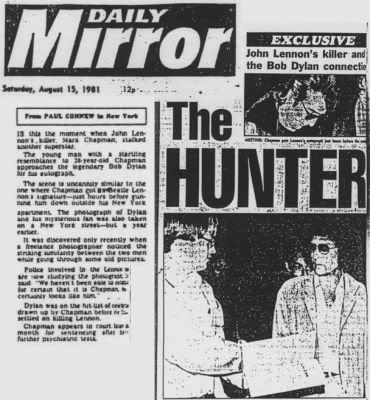
Incidentally, loser assassin Michael David Chapman may have been stalking a different victim 12 months earlier:


Cardboard Boxes is about moving house, as already stated, a nice semi-acoustic number with some great drumming.

Screaming Issue is a song written to Loudon's daughter by the singer Suzzy Roche (member of the family vocal group The Roches), who was born (judging by the song's lyrics) the previous Christmas. There would be another daughter (Lexie Kelly) by another woman later, so that it is sometimes difficult to be sure who these Wainwrights are singing about (Rufus has said that "Little Sister" is not about Martha, so is it about Lucy or Lexie?) At least there is no mistaking for whom this song is intended as Loudon mentions Lucy by name. The title puns, of course, on two senses of "issue." Delicate and beautiful.

Next we have one of Loudon's edgy funny songs, about the questions journalists always ask anyone who still has the temerity to outstay their welcome in the music business: How Old Are You?

The questions range from the nasty and impertinent:

How come you don't try to write a novel?
How come you don't try to write a play?
Isn't it time you died or retired?
Why the hell won't you just go away?
How old are you, are you crazy?
How old are you, are you really a drunk?
Are you bitter, have you grown lazy?
Were you embarrassed about "Dead Skunk"?


to ones that Loudon probably wonders about himself:

How come you didn't get big like Bob Dylan?
How come you didn't get big like Springsteen?
Were you unable or were you unwilling?
Tell us the truth about it, come on, come clean!


(Nice guitar by Richard Thompson, by the way!)

Then there is the utterly charming Animal Song, about the noises that animals make. A children's song. I don't trust the performer who never records at least one of those. Here's Loudon performing the song (followed by 'Five Years Old) live in 1987:


Out of This World is a hopeful song looking forward to the next life. Daddy Take A Nap is a slightly annoying brass band stomp with mildly amusing lyrics written from a child's point of view. Ready or Not (So Ripe) is an optimistic sounding song I've never got my head around.

The album closes quietly with Career Moves, which looks back over Loudon's career in the music business and as an entertainer with a lot of quiet pride:

For 20 odd years I have strummed on guitars
5,000 lost flat picks, four fingertip scars
I must have broken a million g strings
Picking and strumming, and playing these things
Banging and tunin', and playing these things.

And it's been 16 years now that I've written songs
Over a 100 and still growing strong
About drinking and hockey and flying above
Again and again about unhappy love
Over and over, unhappy love.

And it's music for money, but I'll do it for fun
Oh, I know how to do it, it's easily done
To stand on a stage doesn't make me afraid
I'm comfortable up there, it's gotten me laid
It always amazes me when I get paid.

So here am I doing all that I can do
You're paying, I'm playing, I'm grateful to you
Indoors and outdoors, at home and abroad
I sing these songs and you people applaud.
You haven't changed much, you still applaud.


With that obvious cue to the audience in the last line, it will be seen that the album is framed by two songs that seem written to order for Loudon's live shows. Moreover, "Career Moves" is Loudon's answer to some of the questions the hostile journalists ask in How Old Are You?, in particular, why he still sings and why he won't quit the business.

Here's Loudon singing "Career Moves" live on British TV in 1993:


You'll have to supply the applause yourself on cue!

I'm Alright was nominated for a grammy. It goes without saying that it didn't win...

Note: Scandalously, this fine album appears at time of writing to be out of print, with Amazon.com asking nearly $50.00 for a second-hand copy! Ordinarily I would not recommend that anyone download an mp3 copy of the album (that's against the whole ethos of these threads, which aim to present the artistic integrity of the LP/CD medium), but should you wish to support the artist, you can do so here: http://www.amazon.com/Im-Alright/dp/B000UDQ5VK/ref=dmusic_cd_album